
Parents want their children to grow academically, but they also want them to be kind, confident, capable humans. At The Gardner School, we believe social and emotional development forms the foundation for every other skill a child will build. When children feel seen, safe, and understood, they learn more easily, develop healthier friendships, and move through the world with confidence.
That’s why our entire environment is designed with relationships, belonging, and emotional growth at the center. In every classroom, children learn how to communicate their feelings, collaborate with peers, and discover who they are as learners and friends.
Learning Through Relationships
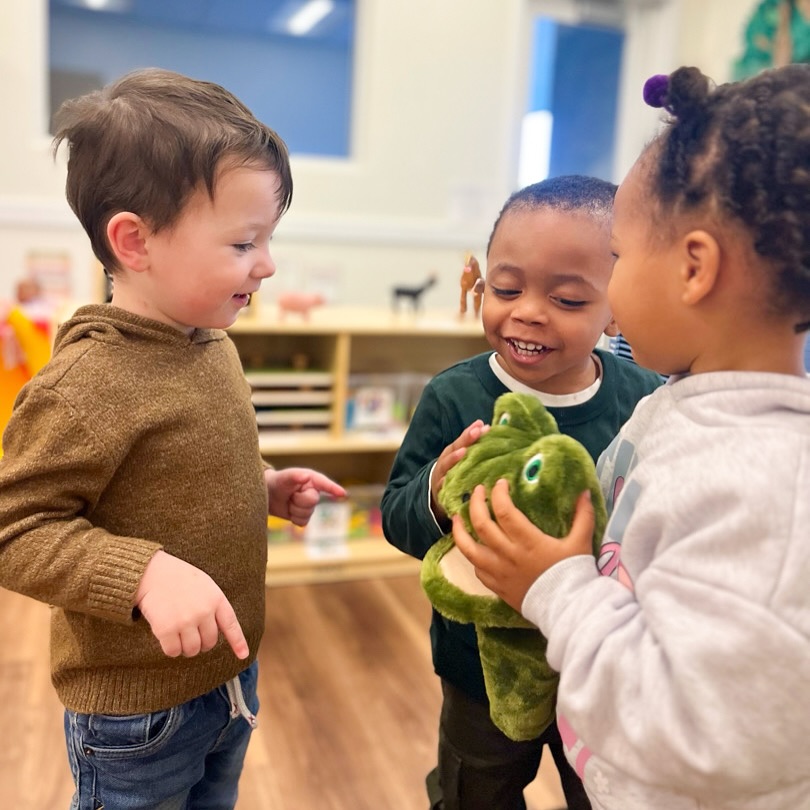
In early childhood, relationships are the curriculum. Young children learn how to navigate the world by observing and practicing interactions with caring adults. Our teachers take this responsibility to heart. They model kindness, patience, empathy, respectful communication, and problem-solving throughout the day. Through consistent routines and warm guidance, children learn how to:
- Name and express their emotions
- Ask for help
- Work through frustration
- Practice turn-taking and sharing
- Resolve conflicts peacefully
- Build trust with peers and teachers
These skills don’t just happen naturally. They’re nurtured through intentional moments and supportive relationships.
Social-Emotional Learning Woven Into Every Lesson
Social-emotional learning (SEL) at TGS isn’t a standalone lesson. It’s infused throughout the entire day and aligns with how young children naturally grow.
Parents often ask, “How do you teach social skills in preschool?”
Here are ways it happens organically at TGS:
- Morning routines: Children check in with their feelings, and teachers help them name and understand their emotions.
- Small-group learning and centers: Students practice cooperation, helping one another, and working toward shared goals.
- Guided problem solving: Teachers use real-life moments, like spilled paint, turn-taking challenges, and big emotions, as gentle, teachable opportunities.
- Encouraging independence: Children build confidence by completing tasks, taking on responsibilities, and making choices.
- Celebrating individual strengths: Each child’s unique personality and spark are honored, building self-esteem and mutual respect.
When children feel emotionally supported, they are more open to exploring, taking risks, and learning new things. SEL strengthens everything from early literacy to communication to self-regulation.
A Community Built on Belonging
Children thrive when they feel they are part of a caring community. TGS classrooms are intentionally designed to create that sense of belonging. We provide:
- Predictable routines that help children feel secure
- Cozy, welcoming environments that encourage conversation
- Age-appropriate responsibilities that give children pride and purpose
- Inclusive practices that honor each child’s background and identity
- Group celebrations that highlight effort, kindness, and growth
When children know they belong, they build stronger friendships, collaborate more confidently, and show greater resilience in both school and life.
The Long-Term Benefits of SEL
Strong social-emotional skills ripple far beyond preschool. Research shows that children with solid SEL foundations are more likely to:
- Adjust well to kindergarten
- Build healthy friendships
- Develop stronger attention and self-control
- Handle challenges with confidence
- Experience greater academic success
- Show empathy and cooperation
- Adapt well to new environments
Parents frequently tell us they see tremendous growth in their child’s confidence, communication, and emotional awareness after joining TGS. These are the kinds of skills that carry into elementary school and beyond. At The Gardner School, social and emotional development is not an afterthought. It’s the heart of who we are. We believe every child deserves to feel understood, supported, and capable of meaningful connection.