

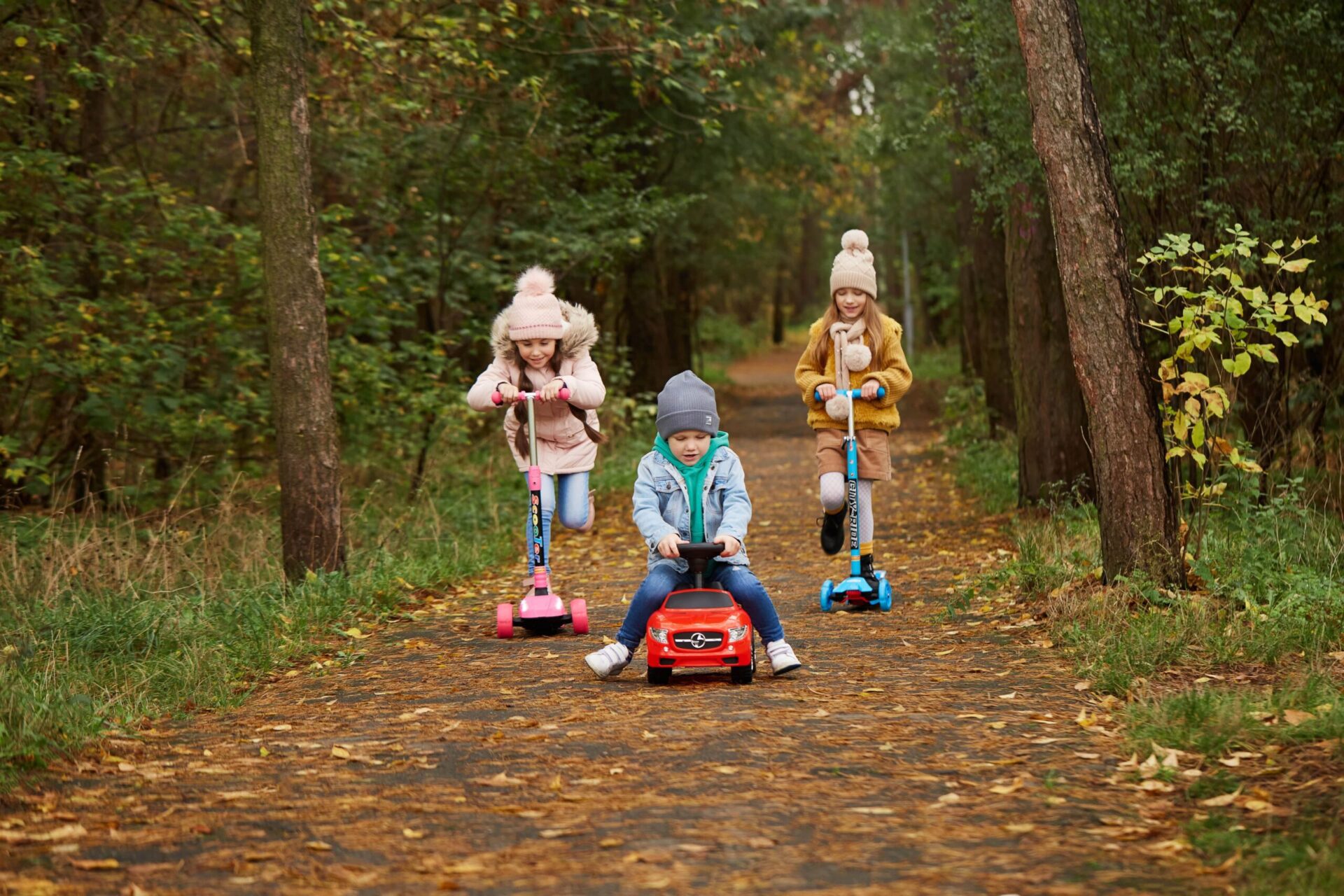
Children naturally gravitate towards playing outside when it’s warmer. But cold weather is also an excellent time to play outside! With fewer insects, chilly temperatures, and sparkling snow, the winter months can be ideal for outdoor play. As the weather gets colder, it can be tempting to keep your preschooler indoors. Here are a few ways that playing outside in the cooler months can keep preschoolers happy and healthy.
1. Outdoor Play Builds Strong Bodies
Active play is one of the best ways preschoolers can expend pent-up energy and remain healthy, even in a winter wonderland. Trudging through snow drifts offers natural resistance training for growing muscles, and making snowballs and snow sculptures builds fine motor skills. Playing outside can also support a healthier sleep cycle by helping children expend energy during the active portion of their circadian rhythm.
2. Outdoor Play Encourages Imaginative Play
Playing with natural materials can open a child’s imagination to new possibilities. While blocks, trucks, dolls, and puzzles have an intended purpose, objects like sticks, leaves, dirt, and snow are raw materials for a child’s creative use. Your child may open a play restaurant, build an enclosure, or make an eco-friendly art project. By providing time for outdoor play, you’re also helping your child’s brain grow as they try new approaches and discover creative solutions.
3. Outdoor Play Increases Vitamin D Levels
Research supports the importance of sufficient vitamin D levels, especially in children. Children who are exposed to more vitamin D see decreased levels of asthma and allergies, autoimmune diseases, and common childhood illnesses. There is even data linking higher vitamin D levels to more stable moods and increased emotional resilience. Outdoor play can boost vitamin D levels and support your child’s overall physical and mental health.
4. Outdoor Play Improves Vision
As children spend more time indoors, researchers have noticed that nearsightedness and myopia are increasing. Parents can help counteract the visual effects of screen time by alternating it with “green time”—time spent outside. Physicians suggest at least 40 minutes of outdoor time per day. Ideally, your child’s preschool will provide ample time outside to protect preschoolers’ vision and strengthen their bodies.
5. Outdoor Play Introduces S.T.E.A.M. Concepts
A love for biology naturally grows out of spending time outdoors. Children can observe seasonal changes, wildlife, ecosystems, and even gravity and physics in their backyard! Time outside is essential to build a curious child interested in living things. You can support their interest by sharing the names of certain species and describing natural processes like precipitation, photosynthesis, and metamorphosis.
Are you searching for childcare that prioritizes outdoor play?
At The Gardner School, we prioritize outdoor and indoor playtime to keep children healthy. To see our inviting preschool spaces explicitly designed for children, check out a virtual tour of our space, or contact us to schedule an in-person visit. You’ll quickly see why parents choose The Gardner School to help build resilient, compassionate and engaged young learners.