

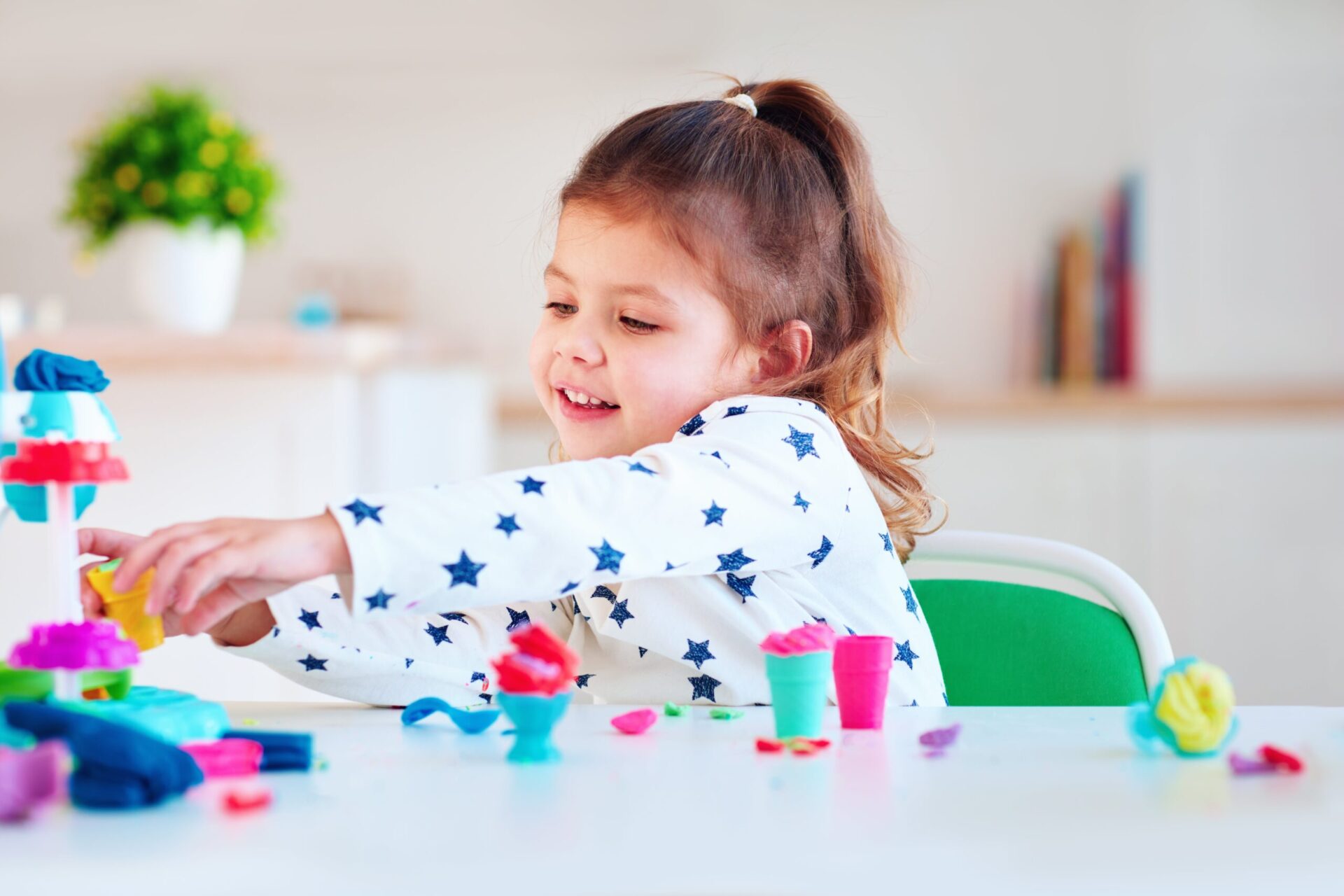
Play-Doh has become an essential part of imaginative play in early childhood education. Its bright colors, moldability, and soft texture make it a perfect creative outlet for preschoolers. But did you know there are also significant cognitive benefits to playing with Play-Doh? Hands-on experiences and open-ended play like this encourage all kinds of development, including creativity, schema building, design thinking, and more. Let’s take a closer look at some of the key benefits of Play-Doh, whether store-bought or homemade!
Creativity
Play-Doh is ideal for encouraging creative play because it can be anything your child wants it to be. Younger children will start out making simple, familiar items, like forming balls, rolling out worms, or smashing flat pancakes. As children grow, so will their Play-Doh crafts!
Help your child take their creative play to the next level by adding simple, child-friendly tools to keep the wheels turning. Cookie cutters, rolling pins, toy cars, candy molds, and plastic utensils are all excellent additions to this sensory experience.
Fine Motor Skills
The rolling, pinching, poking, and smashing is fun, but it also has a deeper purpose. While making worms and other creations, your child is developing their fine motor skills and building strength in their fingers. This will support their pincer grasp, which is used for cutting with scissors and holding a pencil.
Social and Emotional Development
Play-Doh is soft and pliable. It feels good in little hands. It’s the right consistency for smashing, squishing, and pounding, which provides a safe and productive outlet for children experiencing big feelings or an extra burst of energy.
Children can also gain confidence when creating with Play-Doh. Seeing their ideas come to life supports budding imaginations and promotes assurance in their own abilities. Depending on the setup of the play area, children may also need to communicate with one another to share supplies like dough colors and other fun playtime tools.
Hands-On Learning for Science and Math
Play-Doh activities provide many opportunities to introduce the basics of science and math. If your child is making a series of the same shape, you can add counting activities to their play. Once they master counting, you can start using Play-Doh to practice adding and taking away. You can even cut the dough in half to introduce the language used with fractions. Saying “Here’s your half” or “This is my half” will help children conceptualize how items can be divided.
Try making your own Play-Doh for a child-friendly, at-home science experiment. This activity allows you and your child to practice measuring ingredients and mixing them together. Ask your child what they think will happen when a particular ingredient is added. You can even try adding extra water or more flour, all in the name of science!
Meaningful Learning Experiences
The Gardner School encourages meaningful learning experiences through play. We invite your family to schedule a tour and see firsthand how our dedicated teachers and staff are committed to preparing children for kindergarten and beyond.