

As our children grow, so does the list of new skills to teach them. Young children can start learning about household chores and small tasks as early as two years old. Age-appropriate tasks like helping sort the laundry, unloading safe items from the dishwasher, or putting toys away can be activities you do together. These simple tasks for preschoolers can foster a sense of teamwork, a sense of accomplishment, and even help your child build strong family bonds. Of course, your child won’t know how to do all of these chores right away, so a little guidance (and patience) is necessary.
As growing preschoolers are developing key motor skills and learning how to communicate, including them in daily chores and household tasks can have many benefits for both children and parents. If you’re not sure where to start with household chores, check out the lists we’ve compiled below for age-appropriate chores for preschoolers and a few tips on making chores a part of your daily routine.
Household Chores for Ages 2 – 3 Years
You might think your child is too young, but they are more capable than you might think! In general, experts say preschoolers can handle one or two simple one-step or two-step jobs.
- Put toys away
- Put clothes in the laundry basket
- Sort clothes by color or darks and lights
- Hand you the leash before the dog’s walk
- Fill the pet’s food bowl
- Wipe up spills
Household Chores for Ages 3 – 4 Years
Any of the chores above, plus:
- Help select and put away groceries
- Help load and unload front-facing washing machine and dryer with supervision
- Dust furniture with a soft cloth
- Put away folded clothes
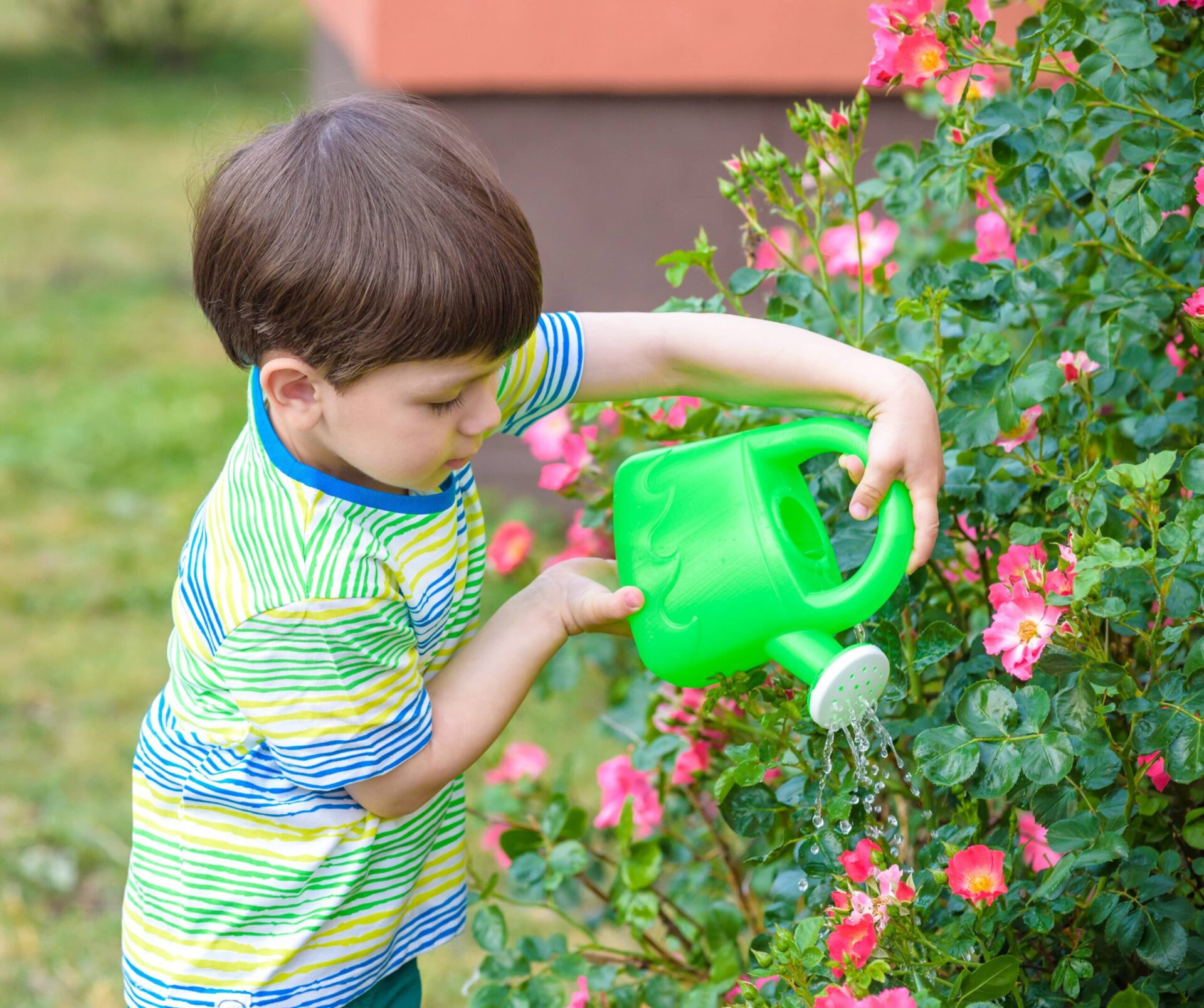
- Help water the plants (inside and outside)
- Sweep the floor
- Add items to small bag for an outing
Household Chores for Ages 4 – 5 Years
Any of the chores above, plus:
- Cut their own food with a child-safe learning knife
- Get a snack or fix a bowl of cereal
- Get dressed and put on shoes and jacket
- Unload utensils from the dishwasher
- Wash plastic dishes at the sink
- Make the bed independently
- Empty wastebaskets
- Set the table before meals
- Clear the table after meals
What Children Gain from Chores
Many studies have shown that teaching preschoolers how to do chores when they are young gives them several important skills and knowledge they will need for later in life. When included in daily household tasks, children learn helping and communication skills that will increase independence and self-confidence. Children who participate in chores will be better positioned for success because of these three skills:
Responsibility—Chores help children learn they have an important contribution to make to the family, and household tasks can also teach kids about accountability.
Participation—Many children eagerly want to be a part of grown-up activities, so chores can be the perfect way to help them feel included.
Self-Esteem— Not only can chores make children feel competent, completing them can also increase positive self-esteem. Experiencing this rewarding feeling early on can lead to proactive behavior as they grow.
Should I Use a Chore Chart?
A chore chart can be an engaging and interactive way to teach kids how to do household chores. Chore charts can also promote teamwork and accountability in fun and motivating ways. The best types of chore charts for preschoolers should include age-appropriate chores, easy-to-understand designs and formats, and fair and creative incentives or rewards for when children complete their chores.
Helping Your Preschooler Learn About Household Tasks
Integrating responsibilities into your family structure doesn’t have to be complicated. Keep directions simple and concise. Clear language will help your child understand what needs to be done.
- Don’t wait to give praise once the chore is done, praise and encourage your child while the chore is in progress!
- And remember, no one is perfect, so keep your approach to chores relaxed, and don’t insist on perfection. There is joy and satisfaction in watching your children build skills, learn from mistakes as they try a new task, and see their smile when they have accomplished the task.
The Gardner School Supports Responsibility
The Gardner School builds responsibility into our students’ daily schedules. As Vernise Wilson, Executive School Director at The Gardner School of Nashville, explains, “A chore chart promotes responsibility and working together. We see this on display at The Gardner School through our use of a daily helper chart, as students take on the roles and responsibilities of being a line leader, a door holder, a lunchroom helper, and more.”
To help your child feel like they’re part of a community, visit The Gardner School and schedule a tour to learn more about how we support developmental milestones at each step of your child’s journey.