

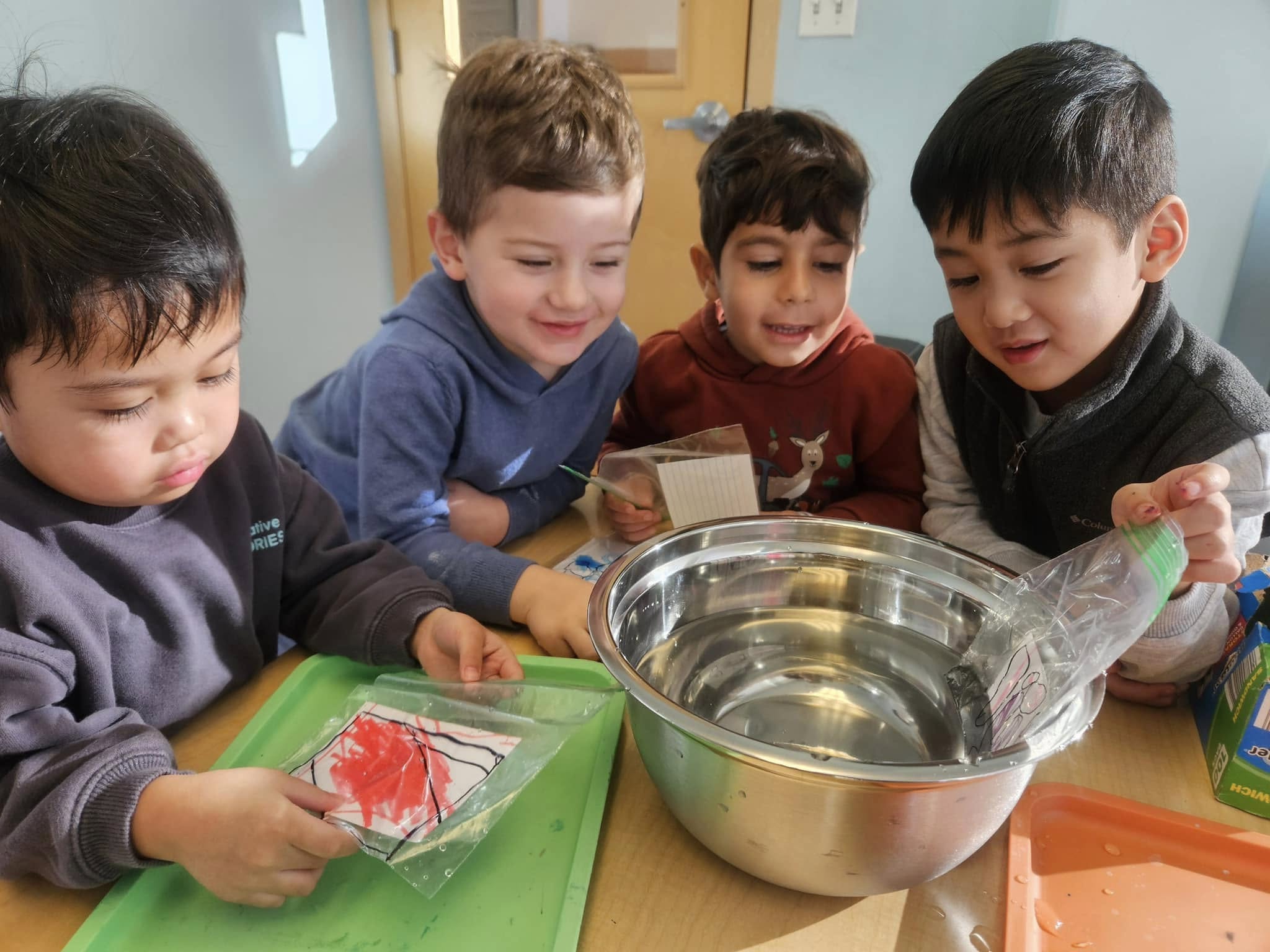
Children learn best when they can explore, test ideas, and discover things hands-on. Experiential learning invites preschoolers to learn by doing, whether through outdoor adventures, creative play, or simple science experiments. These moments spark curiosity, build confidence, and help children form meaningful connections to what they are learning.
Key Benefits of Experiential Learning
Boosts Social and Emotional Skills
Many experiential learning activities take place in pairs or small groups. Whether children are working together to build a tall tower, preparing pretend meals in dramatic play, or exploring nature as a team, they learn important life skills like communication, cooperation, turn-taking, and patience.
Shared experiences help preschoolers practice empathy and perspective-taking. They learn to listen to peers, understand different ideas, and work together toward a common goal. These social-emotional skills give children confidence in group settings and help them navigate friendships with kindness and independence.
Fosters Creativity and Independence
Experiential learning gives children time and space to explore ideas freely. Open-ended materials like paint, sand, blocks, natural objects, and sensory bins encourage imagination and innovation. With fewer rules and more opportunities to experiment, children discover their own ideas and solutions.
Simple tasks like planting seeds or choosing materials for an art project teach responsibility, planning, and independence. Children gain confidence when they see that their choices and actions make a real impact. These early experiences build resilience and support a strong sense of self.
Builds Language and Early Literacy Skills
Hands-on exploration creates countless opportunities for conversation. When children describe what they notice, ask questions, or tell stories about what they created, they build vocabulary, communication skills, and early literacy readiness. Teachers can extend learning by asking thoughtful, open-ended questions that help children think more deeply and communicate their ideas clearly.
Encourages Curiosity, Joy, and Intrinsic Motivation
Experiential learning makes learning feel exciting and meaningful. When children are deeply engaged in an activity that interests them, they stay focused longer and feel motivated to keep exploring. This intrinsic motivation is one of the strongest predictors of long-term academic success. Children who love learning in preschool carry that confidence with them throughout their school years.
At The Gardner School, experiential learning is part of each day. Children explore hands-on materials, participate in creative projects, and spend time outdoors making real-world connections. Teachers guide thoughtful conversations to help children reflect on their discoveries and link them to early academic concepts.
If you want more ways to support hands-on learning at home, explore our blog for more activities that nurture curiosity, creativity, and confidence.