

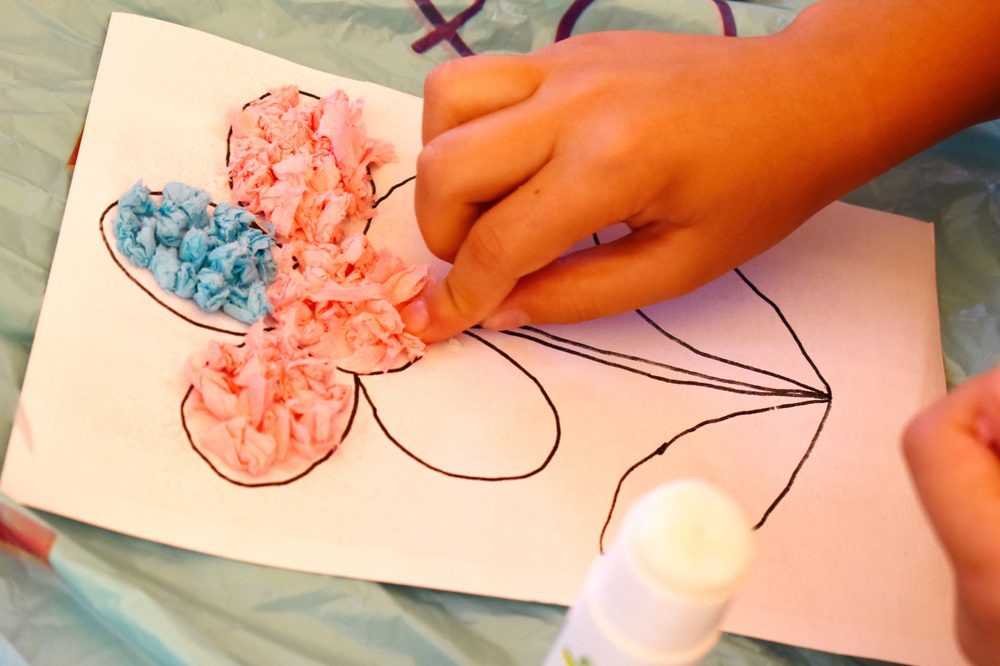
Paper crafts are the perfect at-home activity to ignite your preschooler’s imagination. In a world of over-stimulating technology, arts and crafts help us slow down, work through a task step-by-step, and reach a goal—all while exploring our creativity. Here are seven of our favorite benefits of paper crafts for preschoolers.
1. Improving Fine Motor Skills
Paper crafts encourage children to draw, tear, glue, and paint, along with several other exercises that promote dexterity. These activities develop preschoolers’ fine motor skills and strengthen their ability to concentrate for longer periods. Paper crafts put tangible building blocks in preschoolers’ hands, allowing them to focus on each step separately, and using their motor skills to make adjustments.
2. Developing Imagination
Are we making a flower? An animal? A spaceship? Whatever the result of your child’s paper craft, the journey began with a piece of paper and follows their imagination through to the final product. Every decision your child makes along the way is developing their creativity and discovering their preferences. From color choice to the types of materials they prefer to use, the seemingly-small decisions make the biggest impact on their project’s outcome.
3. Learning to Follow Instructions
With a goal in mind, your preschooler can work on following a step-by-step process to complete a project from beginning to end. Working through this with your child, while allowing them to have creative input, you’re showing them what can be accomplished if they set their mind to it. This lesson also illustrates how our choices—and how much we deviate from the “rules”—affects the outcome of any situation.
4. Promoting Quality Time
As with any activity you do with your child, crafts promote spending quality time together. Choosing the project, following the steps, and celebrating a goal can all be moments that you can share as a family.
5. Inspiring Critical Thinking
Paper crafts inspire your preschooler to think critically. They have endless possibilities as they work through their project, so this is an excellent learning opportunity to see how their choices affect the outcome. If they do something well or make a choice that they like, they are likely to repeat it. On the other hand, if they see that a decision didn’t have the outcome they wanted, they can adjust to improve the next time. Critical thinking activities make your child more likely to explore their own ideas and find new, creative ways to reach a goal.
6. Expressing Emotions
Children express their emotions in a variety of ways. Paper crafts add one more platform for them to share what they might be feeling and give you insight into their emotional health. For example, if they’re drawing a face, and the face is frowning, it opens a line of communication so that you can ask questions (e.g., “Why did you choose a frown instead of a smile?”) This example is one of many, but ultimately, by watching your child’s choices and asking questions, you allow them to share their feelings in ways they might find more comfortable.
7. Encouraging Social Skills
Paper crafts create a collaborative environment where your child can work with you or a peer to meet a shared goal. This collaboration helps them to develop communication skills and gives them common ground with others their age. Even children who have different interests can come together to work on a craft.
Beyond these seven benefits, engaging your child in a paper craft can spark joy and promote new concepts through creative learning. If you’re searching for at-home activities for your preschooler, The Gardner School shares early childhood development tips and activities on our blog and our Pinterest profile. You can also follow our hashtag, #TGSatHome on Facebook and Instagram.