

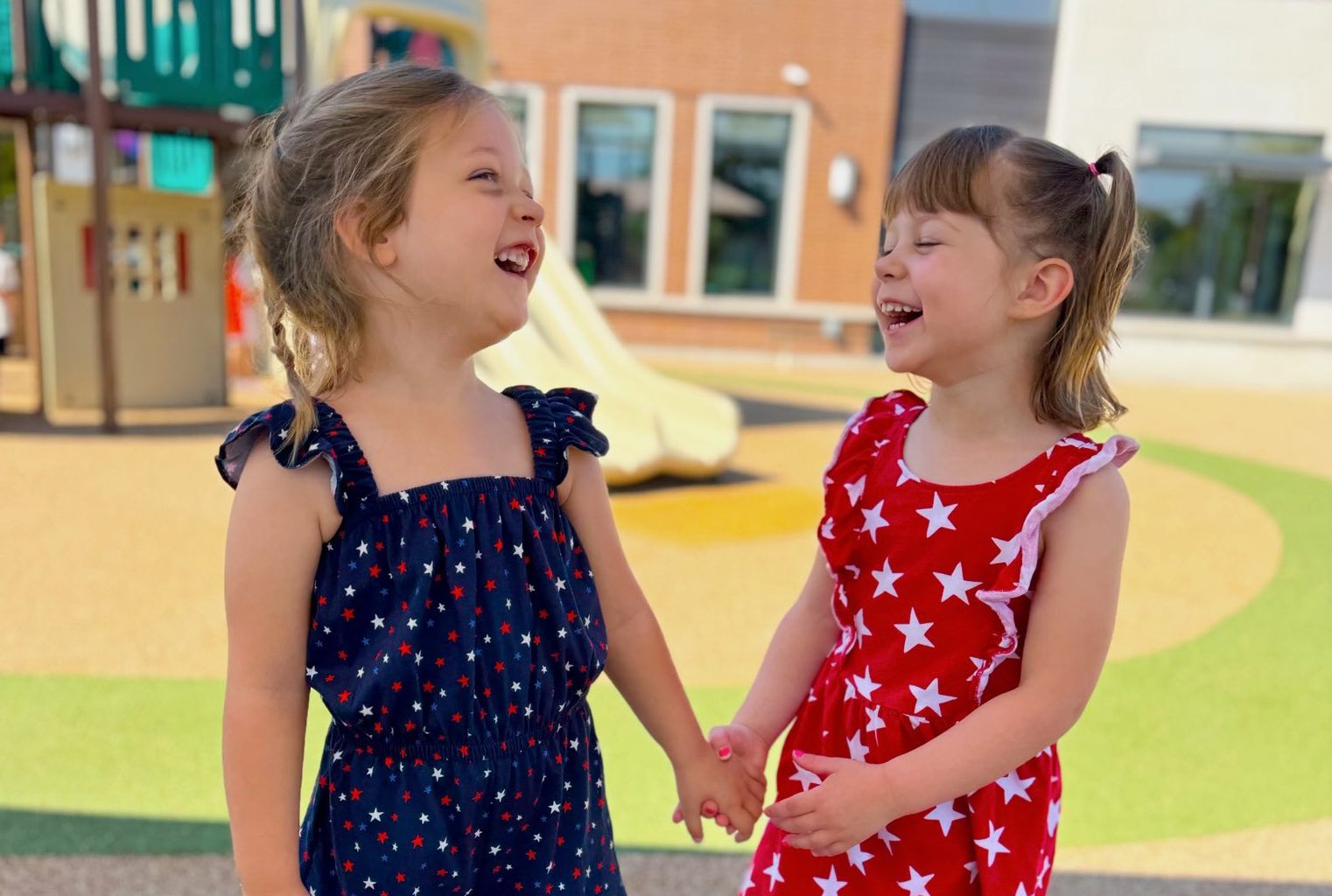
We want to raise children who feel joyful, confident, and connected to the people around them. One of the simplest and most powerful ways to nurture that happiness is through laughter. Humor is more than a fun moment. It strengthens relationships, supports emotional health, and helps children learn about themselves and the world. When young children learn to find joy in everyday moments, they carry that resilience into their school years and beyond.
Here are the benefits of laughter and a few easy ways to bring more giggles into your home.
Laughter Really Is Good for the Body and Brain
Laughter has a meaningful impact on both physical and emotional well-being. It relaxes the entire body, easing tension and lowering stress levels for up to 45 minutes afterward. It supports the immune system by reducing stress hormones and increasing infection-fighting antibodies. It even triggers the release of endorphins, the body’s natural feel-good chemicals that help reduce pain and boost mood.
All of that from a few belly laughs with your child? Yes. Humor is one of the simplest ways to support children’s mental and physical health.
Laughter Helps Children Learn
Joy and learning are a powerful combination. Studies show that children remember information better when it is paired with humor. Laughter increases engagement, curiosity, and long-term recall.
In one study (Esseily et al., 2015), 18-month-old toddlers who laughed during a playful tool-use demonstration were far more likely to repeat the action themselves than those who watched a serious demonstration. That means adding humor to a learning moment can make it more memorable. When you’re practicing basic math, telling a silly story or creating a goofy character can help your child retain the concept and enjoy the process.
Learning should feel warm, playful, and inviting. A little silliness goes a long way.
Try Laughter Yoga With Your Preschooler
Even playful, “pretend” laughter can help boost mood and reduce stress. Research shows our bodies respond to intentional laughter much like the real thing, which is why laughter yoga has become so popular. Fake giggles usually turn real pretty quickly.
A child-friendly version is easy to do at home. Sit together and take turns making exaggerated “ha ha!” or “hee hee!” sounds, wide grins, or silly faces. Children love it, and it gives their bodies the same emotional benefits as spontaneous laughter.
Make a Family Giggle List
A Giggle List is a simple, powerful tool for emotional regulation. It is a list of things that make your family laugh or feel happy. It might include a favorite joke, a funny dance, a silly book, a playful song, or a video that always gets a grin.
Encourage your child to add their own ideas. When they are feeling sad, overwhelmed, or frustrated, their Giggle List becomes a tool they can turn to for comfort and self-regulation. Having this list inside a calming corner or cozy space at home helps children build emotional awareness and healthy coping habits.
And parents can benefit from a Giggle List too. Children learn how to care for their feelings by watching how we care for ours.
Joyful Learning at The Gardner School
Laughter is woven into childhood, and into our classrooms, too. At The Gardner School, joy is part of the learning experience. You will see it in the silly songs teachers sing, in the dance breaks during transitions, in the shared smiles between classmates, and in the playful moments that strengthen friendships.
Our teachers create warm, safe spaces where children can be themselves, try new things, make mistakes, and laugh freely along the way. That sense of belonging helps children build confidence, curiosity, and meaningful connections with others. When children feel emotionally safe, they learn better, play better, and grow into their best selves.
If you would like to see our joyful, nurturing classrooms in action, we would love to welcome you for a tour. Experience the warmth, laughter, and learning that families love at The Gardner School.
Sources: Insights are supported by research from the Mayo Clinic and studies published in Cognition & Emotion and Frontiers in Psychology on how laughter (even pretend laughter) supports learning and emotional well-being.